
The short answer
A creator storefront gives interested TikTok viewers a clear place to compare offers and understand delivery. Separate ready-made downloads from custom commissions, show representative work and provide a supported next step. A clear destination helps evaluation but does not guarantee sales.
Follow the interested viewer
Imagine a creator sharing a great illustration tutorial. A viewer likes the style and wants a custom portrait. Where do they go?
If the answer is “just DM me,” they still have to figure out the price, the options, and what happens next. Imagine a viewer who likes the color treatment in an illustration tutorial. They might want that finished artwork, a printable version, or a portrait made specifically for them.
Interest alone does not tell you which one. The storefront helps them distinguish the options. Begin with the questions they need answered: what is available, what does it cost, what will arrive, and how long does it take?
These are buying decisions, not a demand for more promotional slogans.
Separate ready-made and custom
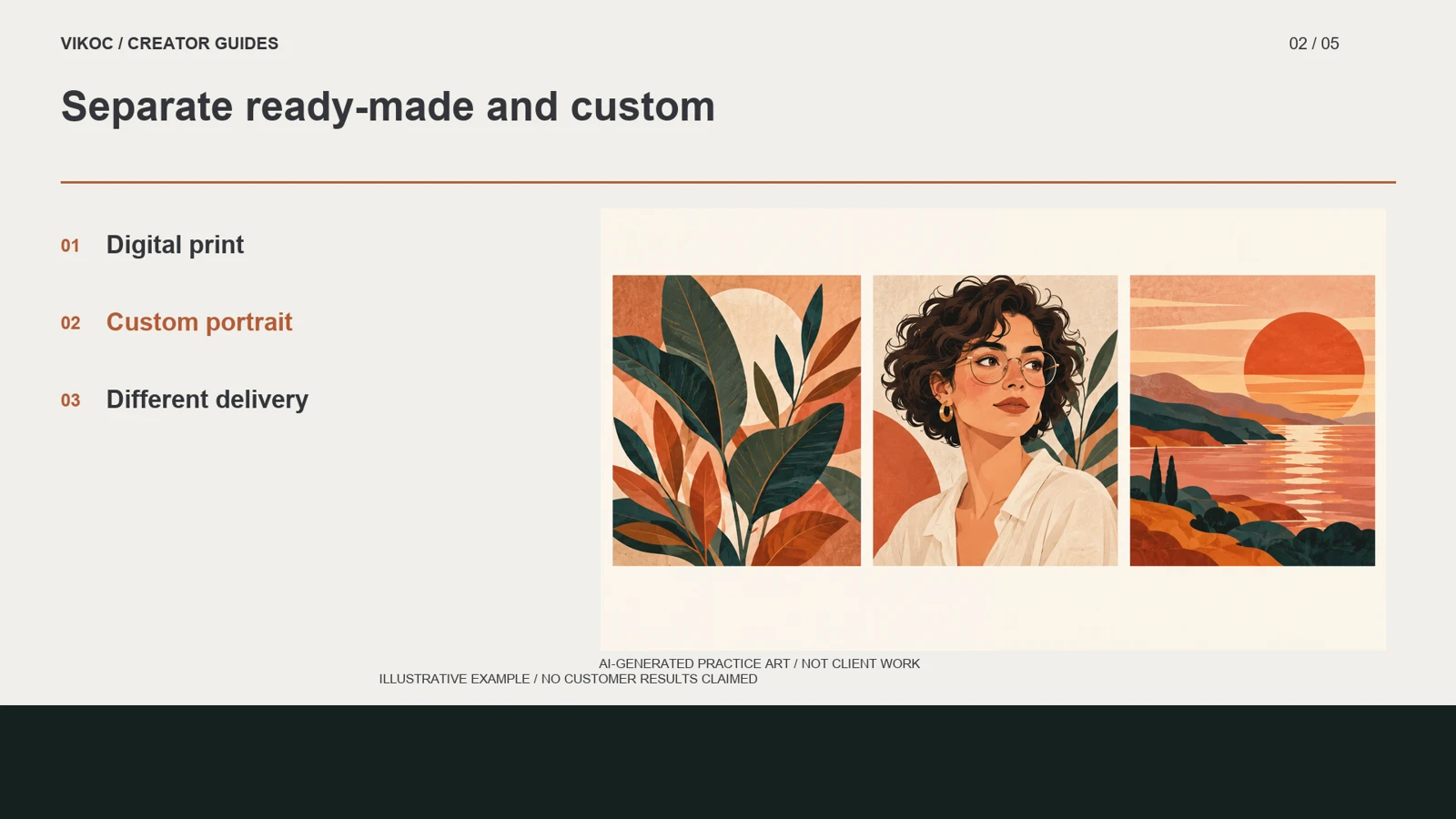
A simple storefront can make those answers visible. Show examples of the artist's work, explain a digital print and a custom commission as separate offers, and give each one a clear next step. A digital print is an existing file.
A custom commission involves new work and information from the client. For the print, describe dimensions, file format, and permitted use. For the commission, describe the brief, style, delivery time, and revision limits.
Do not imply that personalized work arrives as an instant download. Use illustrative artwork you own or have permission to show. The examples demonstrate two offer structures; they are not evidence of customer demand or revenue.
Make the difference visible
Use the illustration example to make the buying journey understandable, without promising sales. Give each offer a title that names the result, then choose a preview that fits it. A visitor should not have to read several paragraphs to understand which offer is ready-made.
Keep the first view simple: two relevant choices can be easier to compare than a long unsorted catalog. This does not mean every creator needs the same layout. It means the page hierarchy should reflect the decision the visitor is trying to make, with clear terms behind each choice.
Build a useful decision sequence
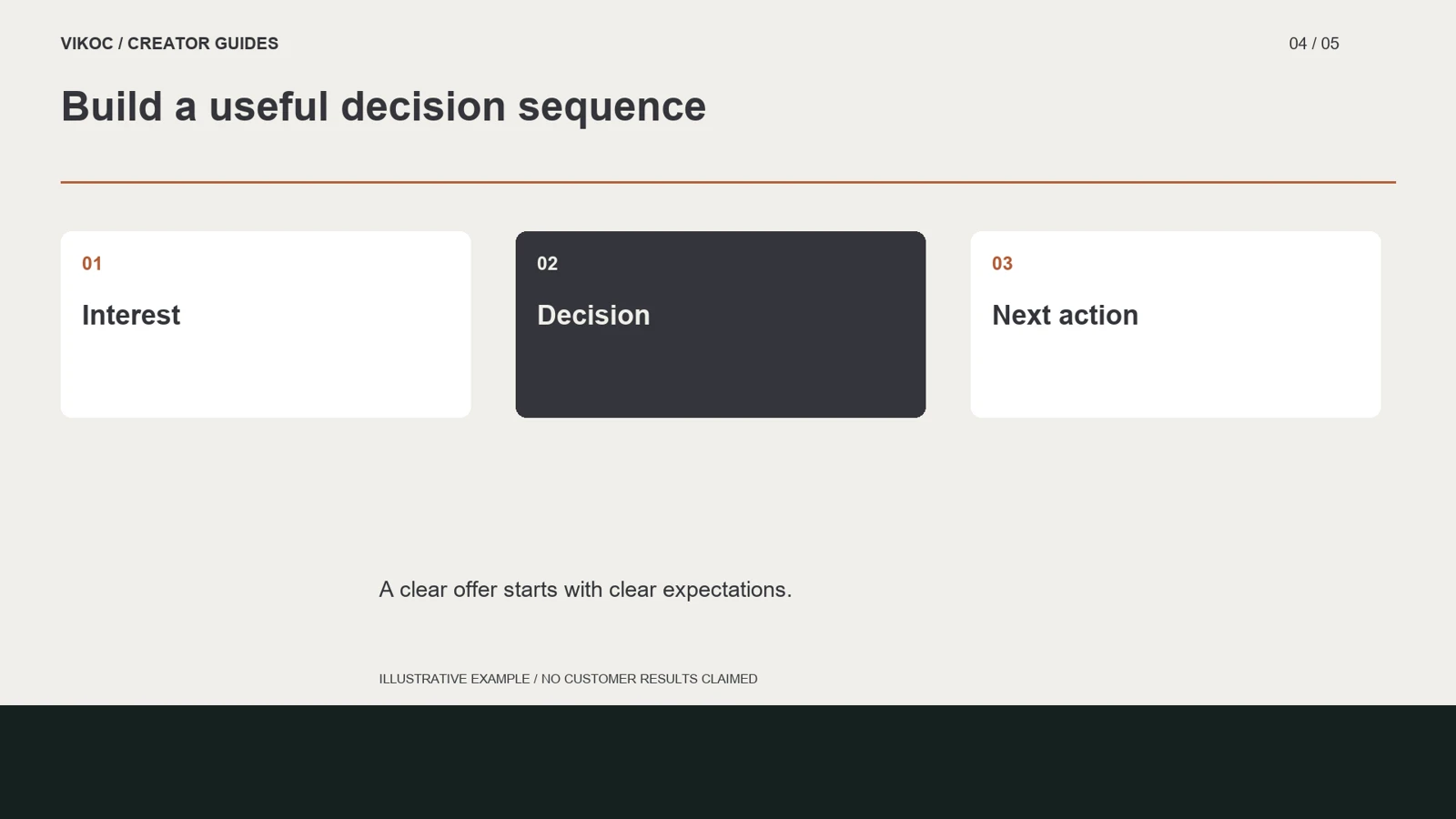
Think of the journey as three questions rather than a funnel that guarantees revenue. First, does the viewer recognize the style or skill? A useful tutorial can answer that.
Second, do they understand the available offer? The page preview and description should answer that. Third, do they know how to continue?
The actual public action and delivery terms should make that clear. For our illustration example, a ready-made print and a custom portrait lead to different forms of fulfillment. Show the difference before the visitor commits.
You can use a simple diagram to explain the sequence without inventing traffic counts. When you collect real results later, keep the source and definition of each measure attached to it.
Evaluate the journey honestly
After the page is available, check the route from the content to the intended destination. Use only the link method your social account supports. A VIKOC connection does not guarantee reach or create native links inside every social video.
If people arrive but still ask what is included, that is useful feedback about clarity. If the route fails, repair it before drawing conclusions about the product. Visits, enquiries, and paid orders describe different events and should be recorded separately.
Try it with one real offer
Write two offer cards for an illustrator: an existing digital print and a custom portrait. Compare file format, required inputs and timing, then map each to one relevant piece of content.
Common questions
Should custom artwork be described as an instant download?
No. Custom work requires inputs and production time. State the brief, timing and revisions separately from a ready-made digital file.
How should I verify this in my own VIKOC account?
Compare the available controls with the offer you intend to deliver. Review the public destination as a visitor and record which setup, payment or delivery steps were actually tested. A local demonstration is not proof of a completed customer transaction.
Official references
Reviewed 25 October 2026. Account eligibility and terms can change; verify the current documentation and your own configuration.