The short answer
A simple digital product sales funnel connects useful content to a matching product page and a reliable purchase-and-delivery path. Each step should help the same audience make one clear decision; measure where people lose context rather than adding more pages.
Moment one: A relevant reason to stop
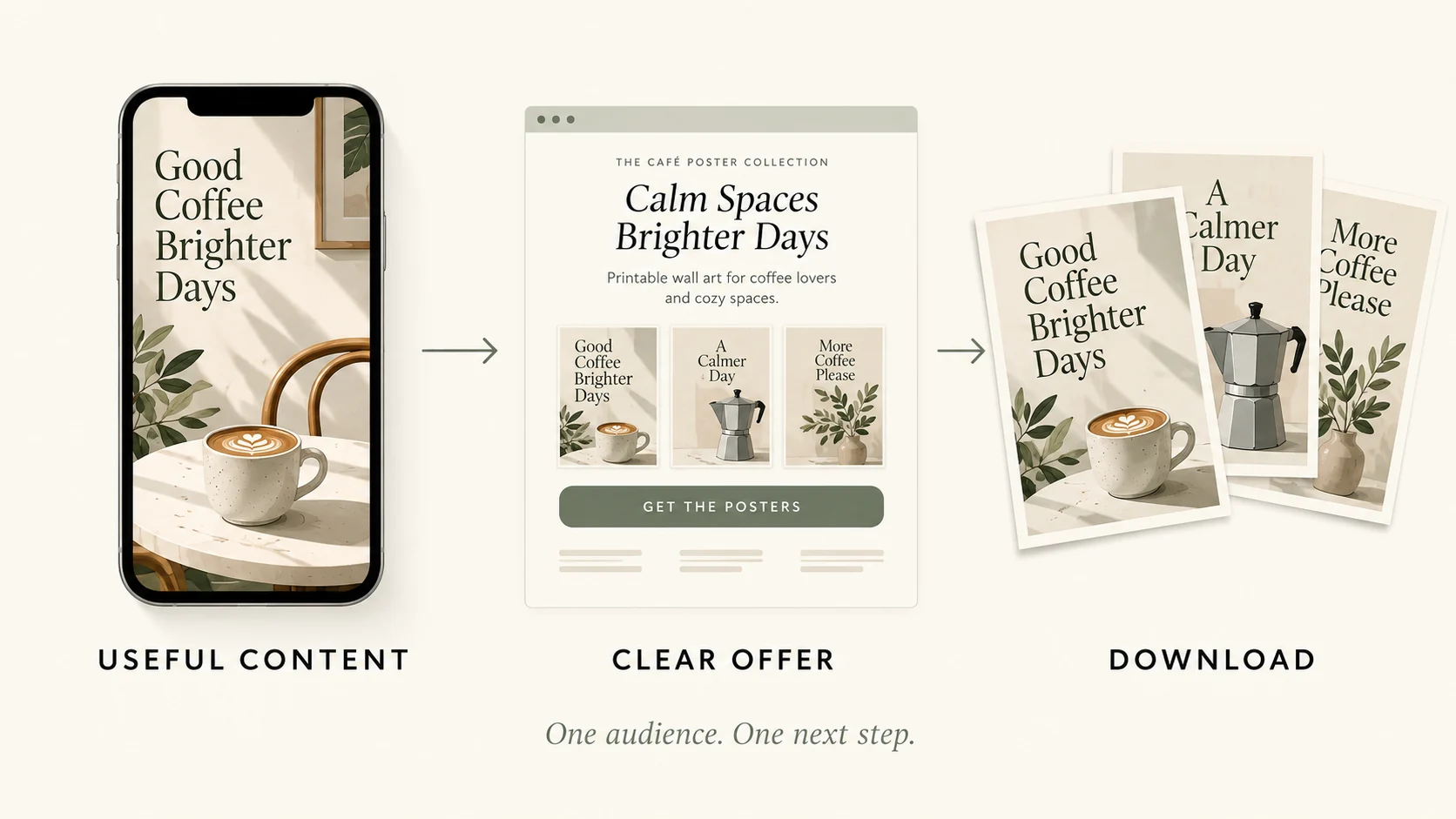
Our fictional visitor, Alex, is preparing a weekend brunch event. A short video shows how a readable headline improves a café poster. That is a specific reason to watch.
The content should offer something useful before asking for a sale. Show the actual design and explain one choice the viewer can understand. Avoid opening with a vague promise about making money or transforming a business.
The first step of this journey is a match between a real task and a useful piece of content.
Moment two: One clear next step
At the end of the content, give one relevant invitation, such as view the three-design café poster pack. The destination should match that invitation. Sending Alex to a crowded page with unrelated offers makes the next decision harder.
A creator storefront can still contain several products, but the main offer should be easy to find. Use an available, permitted link placement on the channel you are using. Do not assume every account has the same linking features.
The invitation and destination should describe the same resource.
Moment three: Enough detail to decide
On the product page, Alex needs to see the designs, understand the formats, and know whether editing is possible. The page should explain that this example contains PNG and SVG files, not printed posters or a custom service. Price and delivery expectations should be clear.
An impressive page cannot rescue a mismatch between the promised product and the visitor's task. In VIKOC, check the relevant product fields and preview, then evaluate the page as a buyer. A preview is not a substitute for a completed purchase test.
Moment four: Delivery is part of the journey
The funnel does not end with a button click. A buyer needs the promised files and simple instructions for using them. Verify the delivery route and test the package you intend to distribute.
If a file needs specific software, repeat that requirement in the instructions. Provide a reasonable contact path for access problems. A confusing download creates support work and weakens trust even when the promotional content was good.
Treat the first successful use of the product as part of the experience you are designing.
Find the break before adding more traffic
Use whatever reliable information your tools actually provide. If relevant people watch but do not follow the invitation, inspect the relevance and clarity of the next step. If they reach the page but ask what is included, improve the product explanation.
If buyers struggle after delivery, improve the package and instructions. These are hypotheses to test, not automatic diagnoses. Small samples can be misleading, and one number rarely explains the whole journey.
Start with an observed problem, make a focused change, and look for evidence that it helped.
Try it with one real offer
Map one café poster demonstration to one poster-pack page. Check the promise, preview and delivered files for consistency. Record relevant visits, offer questions and completed purchases without treating any stage as a guaranteed outcome.
Common questions
Do I need a complicated funnel to sell one download?
No. Start with the fewest steps that let a buyer understand, purchase and receive the product. Add steps only when they solve an observed problem.
Which metric should I look at first?
Start with whether the right people reach a page that matches the content they saw. Then evaluate product interest and completed purchase or delivery steps, considering the sample size.