
Creator commerce · Data contrast
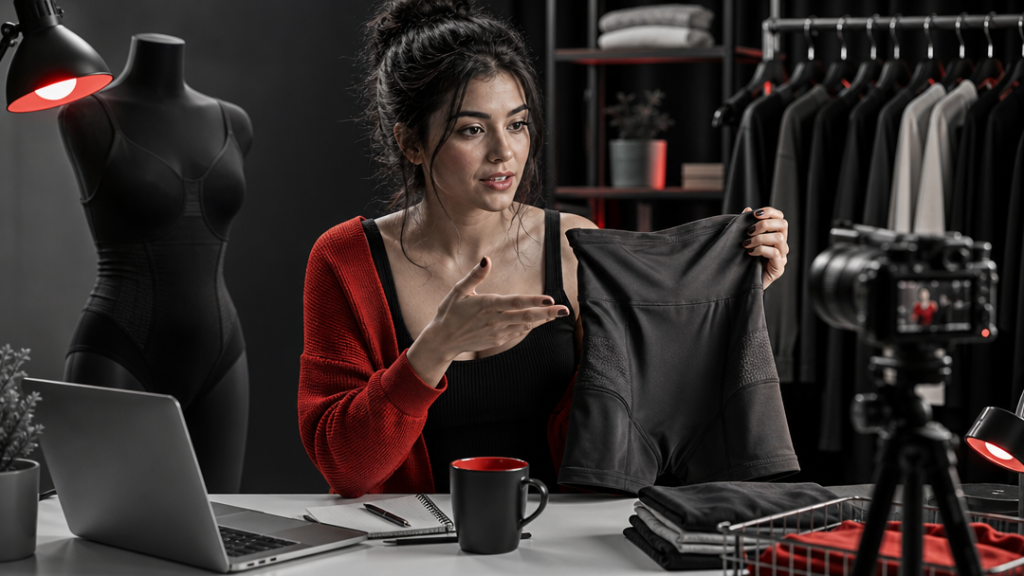
A shapewear-named profile with a customer-service bio opens a practical question for creators who sell: should a neutral size-exchange question list stand beside the product or inside a video? The archived commerce record shows reported buying activity and a limited promoted-product count, but it cannot prove which product sold or that a return promise exists. That makes placement a reader experiment, not a claim about this creator’s workflow.
Commerce performance: a placement decision, not a demand proof
Followers
137,600Follower snapshotVideo units sold
10,600Rolling 90 daysProducts promoted
2Rolling 90 daysReported video sales
$233,000Rolling 90 daysVideo sales value per unit
$21.98Rolling 90 daysImagine you sell shapewear and your bio, like this profile's self-described line, points shoppers to customer service. You face one bounded decision: where do you place a neutral size-exchange question list so a buyer can get sizing and policy information before purchase, not after? The answer depends on whether the pre-purchase question is better handled beside the product or inside the video where the item is shown.
Get the placement wrong, and a buyer who is unsure what to ask may delay or abandon; get it right, and the question list becomes a service tool without implying a return right. That is a proposed reader decision, not a technique this creator is shown to use.
The commerce snapshot gives the decision a useful priority, but not an answer. Reported video-commerce activity alongside only two promoted products is consistent with a concentrated product set, yet the record does not show whether one product generated most of the activity, whether both were featured equally, or whether the products were shapewear.
A reader can therefore test the question list on the product receiving the clearest current offer, rather than treating the aggregate figures as proof that sizing caused purchases. The archived category labels are not a sales-category mix, and the totals do not establish which specific products were purchased.
The profile names shapewear, so the hypothetical problem is a shapewear seller's, motivated only by the self-described service theme, not by proved demand. The archived data supports that this commerce activity exists, not which item drove it.
The compact source context is: 137,600 followers at capture, 10,600 video units sold, $233,000 in reported video sales value, and 2 promoted products over the verified 90 days; the aggregate sales value per reported unit is $21.98. The ratio is not a price or order value.
What the record adds is reported purchase behavior and a possible concentration question, not an explanation of either; for another creator, that gap is the reason to separate the placement decision from any claim about demand.
Your next step with VIKOC
Give your next idea a place to sell.
Create a VIKOC account, then start setting up your own storefront. Use the lessons here to make your offer clear to customers.
Already have an account? You can sign in on the next page.
Build a size-exchange question list that asks, not promises
Proposed lesson: treat a neutral size-exchange question list as a pre-purchase information tool, not as a promise of return rights. The list should ask for facts the seller can confirm today: available size range, measurements to compare, whether an exchange or return is currently offered, who pays return shipping, and any time window.
A hypothetical shapewear buyer might use it before checkout, and the seller's answer should be recorded word for word.
If the answer is 'no exchanges,' that is still useful information, not a failure of the list. The list stays neutral because the archived profile cannot establish actual exchange rules, inventory or sizing. The same list can sit on a product page or inside a short video, and the placement decision is what the reader is testing.
If a creator cannot supply a current policy answer, that missing input should stop the test rather than be filled with a general promise.
Test the placement decision with known answers, not generic logs
Run a small mock decision that tests the placement question directly. Give the same neutral size-exchange question list to two hypothetical buyers with known correct outcomes: one with a clear current exchange policy supplied by the seller, and one where no policy is confirmed.
Ask each mock buyer to answer what the list tells them before purchase, then score each answer as pass, fail or abstain against those known answers. Pass if the answer correctly distinguishes an information request from a promised return right; fail if it treats the list as a guarantee; abstain if the mock buyer cannot tell from the supplied policy.
Do not record clicks, conversions or generic audience questions; those do not test placement. If both mock buyers pass with the list on a product page but only one passes inside a video, the next explanation should place the list beside the product until a video version is explicitly tested. If neither placement produces a pass, revise the wording or obtain the missing policy before making a storefront decision.
No response guarantees buyer behavior; the mock only shows whether the explanation is clear enough to guide a real placement choice.
About the data
Sales and promoted products cover the recorded rolling 90-day period; followers are a separate snapshot. Sales are source-reported, not independently audited or creator earnings. USD uses the confirmed default where source currency is missing. No usable video link accompanies this archived sample; no video content analysis was used.
- Followers: 137,600
- Point-in-time snapshot. Captured 2026-11-12 06:50:06-08.
- Video units sold: 10,600
- Source-labelled rolling 90 days. Captured 2026-11-12 06:50:06-08.
- Products promoted: 2
- Source-labelled rolling 90 days. Captured 2026-11-12 06:50:06-08.
- Reported video sales: $233,000
- Source-labelled rolling 90 days. Captured 2026-11-12 06:50:06-08.
- Video sales value per unit: $21.98
- Calculated from sales value divided by units sold in the same period. Source-labelled rolling 90 days. Captured 2026-11-12 06:50:06-08.
Updated November 18, 2026. Independent analysis; no creator endorsement implied.
Request a correction or removal

David A.
0 comment