
The short answer
To sell services online, turn your skill into a clearly scoped offer: define the deliverables, required client information, delivery timing, revision boundaries and price. A custom service requires a different fulfillment process from a ready-made download.
Choose the right offer type
First, choose the format that matches the work. A ready-made poster pack is a digital download. A poster created for one customer's event is custom work.
If the scope needs a conversation before you can quote a price, collect an inquiry instead. VIKOC separates these paths. For our defined design package, we will use Custom products and services, because the customer pays for an agreed result that you create afterward.
Define what the buyer receives
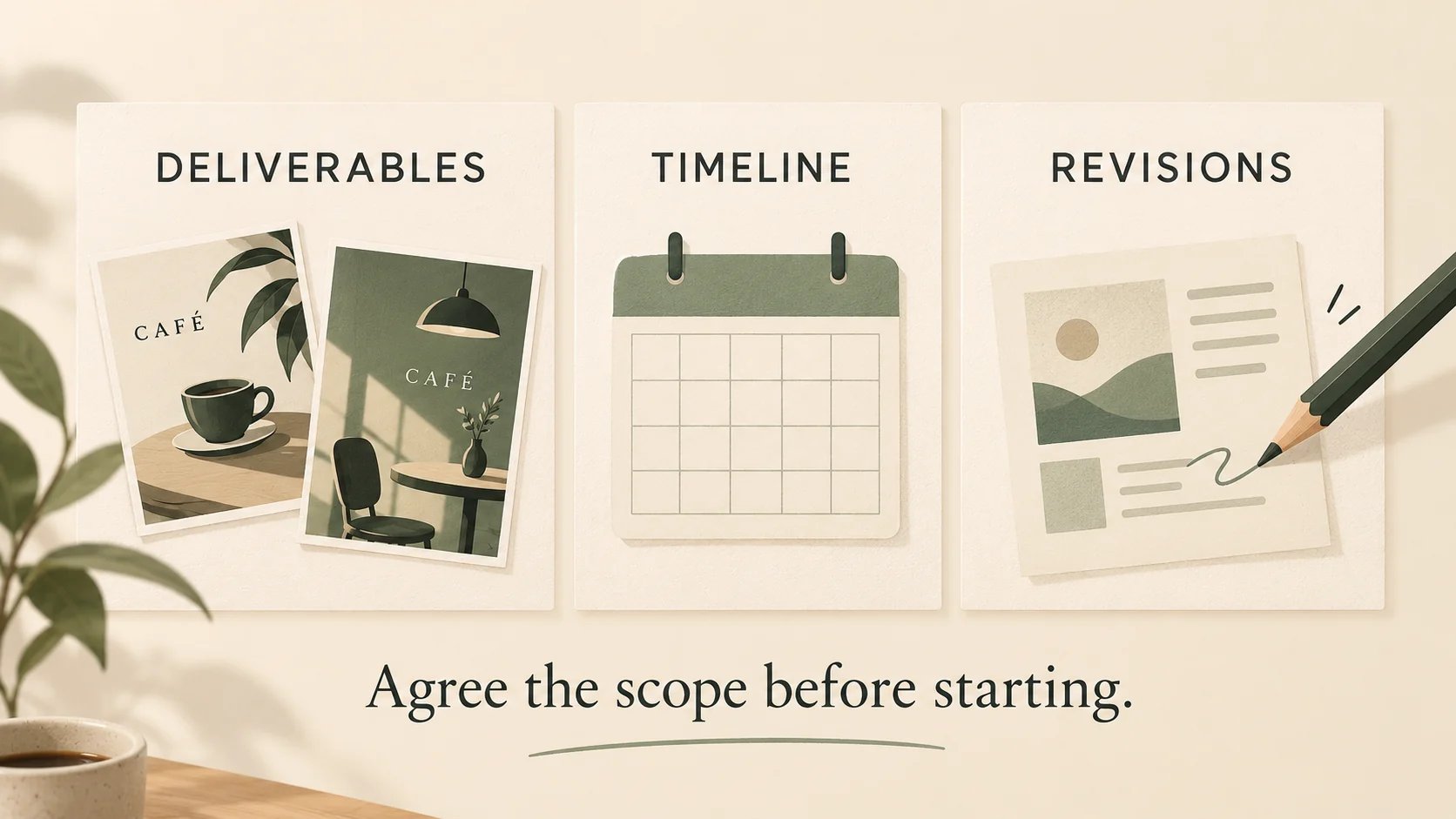
Make the package specific. Our example includes one custom event poster, a finished PNG, and an editable SVG source at ten eighty by thirteen fifty pixels. It includes one design direction and one revision round.
Printing, a new logo, and extra sizes are outside this example package. These boundaries should be visible before purchase. Replace them with the deliverables you can reliably provide, rather than offering unlimited work for one fixed price.
Set up the offer
In the custom offer form, choose Personalized file for this digital design delivery. Enter a specific title, a one-sentence introduction, and the description of what the customer receives. A hypothetical $49 service price illustrates how to present an offer; it is not a recommended market rate.
Set your own price based on the work and costs involved. Add a relevant cover, and make sure it represents the kind of result included in the package.
Ask for the information you need
Next, prepare the customer brief. The Custom design template includes questions about brand name, style and colors, a reference link, and dimensions and format. Adapt those questions to the service.
For a poster, ask for the exact event wording and any required brand assets. Make essential answers required and explain what a useful answer looks like. A focused brief reduces avoidable questions after the customer has paid.
Set realistic delivery and revision rules
Set a delivery time you can meet. The form labels this in hours after payment; seventy-two hours means three days. Explain what one revision round covers, such as text, color, or layout adjustments within the original brief.
A new concept or additional size is a change of scope, so explain how you will handle it. Review the platform's refund rules when writing your own policy, rather than promising terms the platform does not support.
Review the customer journey
Before publishing, read the offer as if you were buying it. Can you identify the final files, the deadline, and the information you must provide? Check the cover, price, and revision terms together.
Review the publishing rules and make sure the offer and payment setup are ready. Save and review your service listing, then verify how customer requests reach you before accepting orders. A preview is useful for checking presentation, but it is not proof of a completed purchase.
Keep delivery aligned with the agreement
When real orders arrive, work from the agreed brief and keep the customer informed. Deliver clearly named files and a short note explaining what is included and how to open them. Check the exported design before sending it.
If the customer asks for a change, compare it with the revision policy and original scope. Clear communication at this stage matters as much as the design itself, especially when the request introduces new work.
Try it with one real offer
Draft a café poster design service brief. State how many designs and revisions are included, which files are delivered, what the client must provide, and when the delivery clock starts.
Common questions
How is a service different from a digital download?
A standard download delivers an existing resource. A service includes work performed for a customer, so the brief, timing, review process and boundaries must also be agreed.
Should I promise unlimited revisions?
Only promise a revision policy you can actually fulfill. A defined number of revision rounds and clear scope make workload and customer expectations easier to manage.