The short answer
Reduce repetitive client DMs by answering fit, scope and process questions on a clear service page. Use relevant examples, exact deliverables, required inputs, timing and revision limits. A portrait illustration is a useful example of a service that still needs a project-specific conversation.
Choose the repeated question
The fix isn't a longer DM. It's a clearer offer. Put the answers somewhere clients can see before they contact you.
Our example is a freelance illustrator offering a custom portrait. Before drafting the page, sort the usual questions into three groups: fit, scope, and process. Fit means whether the style suits the client.
Scope means what the payment covers. Process means what happens after the client starts. These categories help you decide what belongs on the page and what still needs a conversation.
The message examples here are invented teaching prompts, not screenshots of private customer conversations.
Make the deliverable tangible
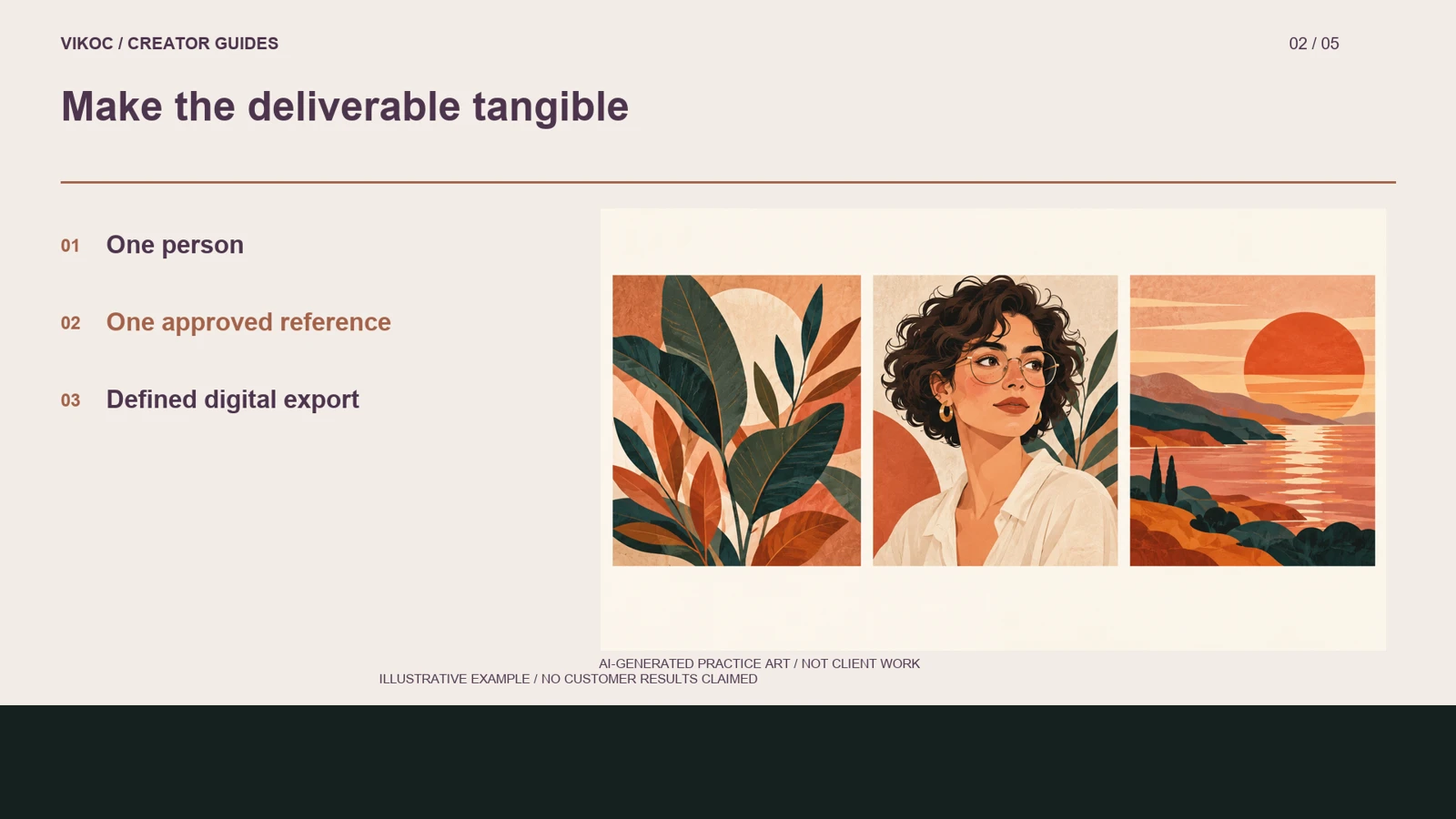
Start with a short description of who you help. Show two or three real examples of your work. Then list what's included, what's not included, the timeline, and the price or starting price.
A clear portrait offer might describe one person, one approved reference image, a defined illustration style, and a digital file delivered at a stated size. The exact terms are the creator’s choice; the important part is stating them before the work begins. Show original examples or work you have permission to display.
Label practice pieces as samples. If you show several styles but only include one in the package, explain which style the client is actually ordering.
Explain changes and timing
The client can explore the scope first and reach out with a better question. A revision round is easier to understand when you say what can change. For example, color adjustments after a draft are different from replacing the whole composition.
Explain how the client submits feedback and when the delivery clock begins. If the clock starts only after a usable brief arrives, say that. An optional extra should not be presented as included work.
Put exclusions beside the included deliverables so a client does not discover the boundary only after asking for it.
Write the first useful paragraph
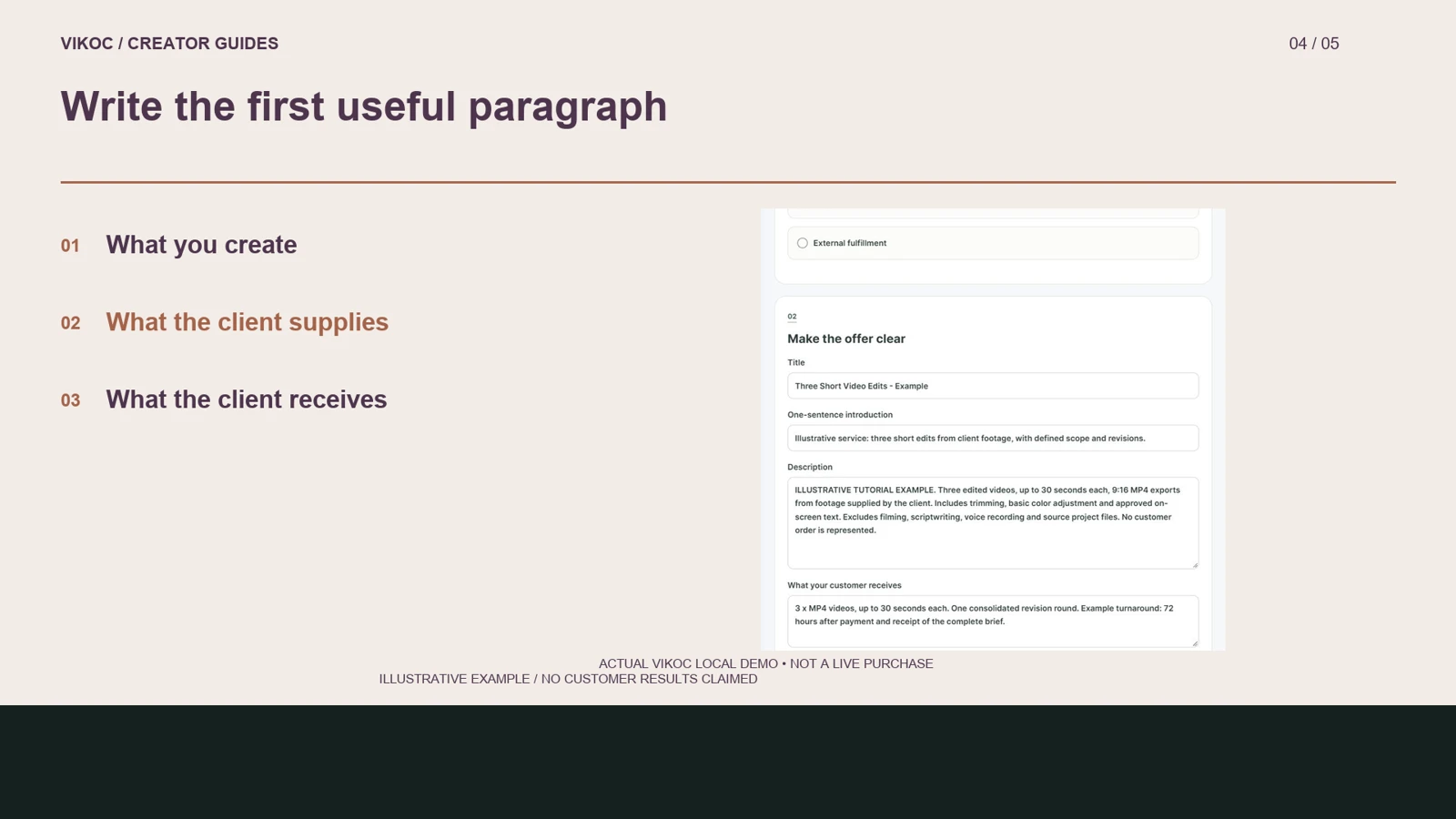
Try a plain-language description before adding a slogan. For example: this sample offer is a digital portrait of one person, based on a reference photograph supplied by the client. The client receives the agreed digital export, and the page explains the draft and revision process.
Then add the style examples and exclusions. The paragraph is deliberately concrete. It tells the visitor what the work is, what they must provide, and what will arrive.
Read it aloud and remove any phrase that sounds impressive but does not help a client decide. In VIKOC, the description and customer-deliverables fields give those details separate places. Keep the intake questions consistent with the information the page says you need.
Use the page in a conversation
The service editor can hold the description, examples, and the next step that your account supports. Use the actual available contact or order route, not an invented quote button. Then read the public version as someone seeing your work for the first time.
When a new enquiry arrives, point to the relevant detail and discuss anything genuinely custom. A clearer page can reduce repeated explanations, but it does not remove the need to qualify the project or promise that enquiries will increase.
Try it with one real offer
Write a one-person portrait offer. Name the reference required, export format, included changes and delivery start point. Label practice artwork honestly, then ask a reader which questions remain unanswered.
Common questions
Can a clear service page replace all client conversations?
No. It can answer recurring scope questions, but custom work still requires qualification and agreement. Do not promise a measured reduction in messages without evidence.
How should I verify this in my own VIKOC account?
Compare the available controls with the offer you intend to deliver. Review the public destination as a visitor and record which setup, payment or delivery steps were actually tested. A local demonstration is not proof of a completed customer transaction.