
The short answer
Reduce repeated client questions before purchase by explaining scope, required inputs, revisions and timing on the service page. For a custom pet illustration, clarify the number of subjects, background, file format and reference-photo requirements before work begins.
List the recurring questions
Start with the questions a real buyer would ask. For a pet illustration, they may need to know the number of subjects, art style, background, file format, and delivery timing. Put the important answers on the offer page instead of saving all of them for private messages.
This does not eliminate every conversation. It gives useful conversations a better starting point and helps buyers recognize unsuitable requests early.
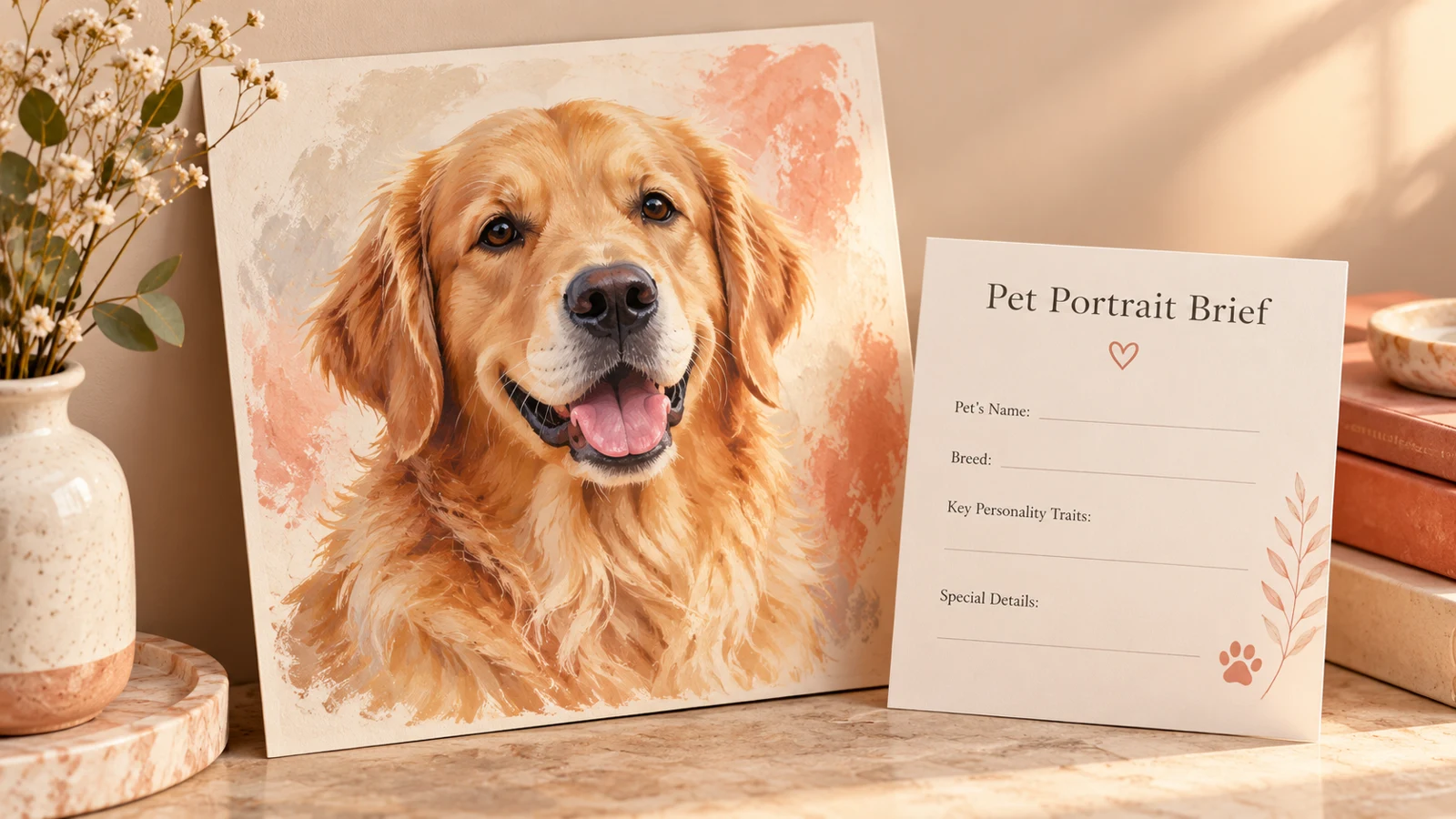
Define one understandable package
Our example includes one pet, a simple background, and a digital image file. Printing, framing, extra subjects, and commercial usage are not automatically included. Replace those boundaries with the service you actually provide.
Show a representative sample and explain what can vary. A buyer should understand which changes are personalization within the package and which would require a different scope.
Ask for a focused brief
Use the customer brief to collect the information you need to begin. Ask for a clear reference image, the intended use, and any essential preference. Explain what makes a useful reference, such as an unobstructed face.
Avoid a long questionnaire full of details you do not use. Do not request unnecessary sensitive information. If a reference is unsuitable, explain how you will resolve that before starting the artwork.
| Decision | What to check |
|---|---|
| Reference | A usable pet photograph |
| Preference | Style and background choice |
| Delivery | Required size or intended use |
Explain revisions and timing
Define what a revision round covers. Adjusting a color within the agreed illustration is different from adding another pet or requesting a new art style. State how you handle these changes before purchase.
Make the delivery promise consistent with the platform's timing fields and your actual workflow. Do not claim a deadline starts after a brief if the offer's visible rule starts after payment. Resolve the inconsistency first.
Use inquiries when scope is unclear
In VIKOC, a defined custom service can suit a standard request, while an inquiry path can suit an unusual project. Keep the explanation aligned with the path you choose. Review the public page, brief, price, and terms together.
If several people ask the same question, improve the relevant sentence. The aim is informed buyers and useful conversations, not preventing clients from asking for clarification.
Try it with one real offer
Write a brief for a one-pet digital illustration. Specify a useful reference photo, intended use and essential preferences, then distinguish an included color adjustment from adding a second pet.
Common questions
What should a custom-service brief ask for?
Only information needed to begin: suitable references, intended use and essential preferences. Explain how an unsuitable reference will be resolved.
How should I describe revisions?
State what a round covers and which changes alter the scope. Keep the delivery start point consistent with the visible offer terms and your actual workflow.