

The short answer
Package freelance video editing services around a concrete unit of work. Define the number of videos, maximum length, format, client inputs, turnaround, revision scope and exclusions. Keep the public offer consistent with what you can actually deliver.
Start with a concrete unit
Start with one specific result: editing three short-form videos from footage the client provides. Then define the format, maximum length, turnaround time, and how many revision rounds are included. Our illustrative package is three edited short videos made from footage supplied by the client.
Define what counts as one video: the maximum duration, aspect ratio, and export format. A package becomes hard to compare when one client imagines a fifteen-second clip and another imagines a long interview. Use your own sample footage or material you are licensed to display.
Label the demonstration as a sample rather than implying it came from a paying client.
Specify the handover
Next, explain what isn't included—like filming, scripting, or unlimited revisions. That protects both sides from unclear expectations. Describe the files and instructions the client needs to send before editing begins.
That could include source footage, a reference style, approved wording, and the intended platform. Say whether captions, music selection, or a thumbnail are part of the package. If the client must supply a license for a track or other asset, make that clear.
A short intake checklist can prevent missing information, but it should not request unrelated personal information or account passwords.
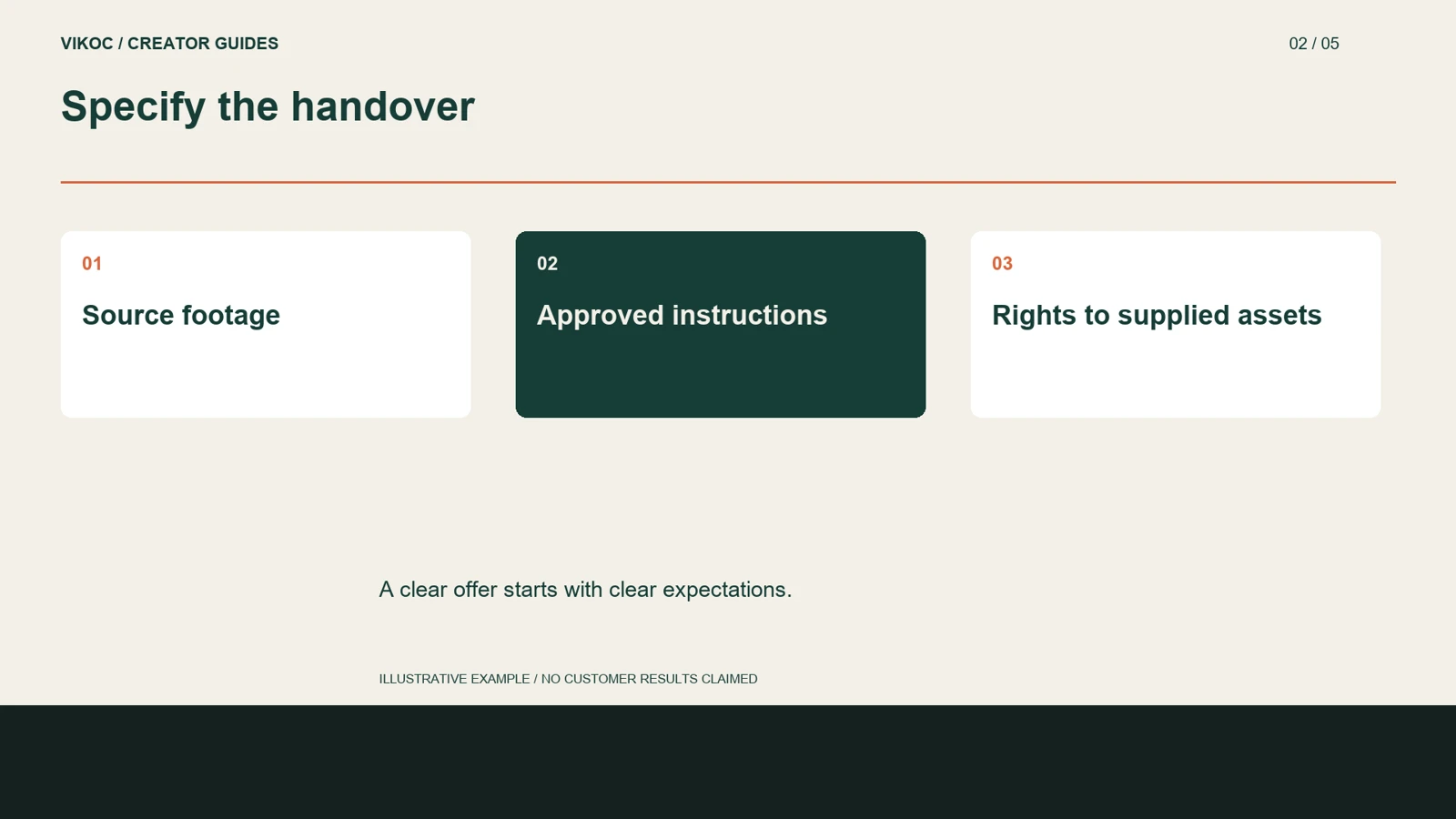
Define revisions and exclusions
Finally, present the package with examples, a price or clearly explained quote process, and the next step to order or enquire. State when the first draft will be delivered and what a revision round covers. Correcting a caption is different from rebuilding a video around new footage.
Explain how new scope is handled, and avoid unlimited revisions unless that is really your offer. Put filming, scriptwriting, voice recording, or source-project files in the excluded list if they are not included. These are example terms to illustrate clarity, not a recommendation that every editor use the same commercial arrangement.
Translate the package into fields
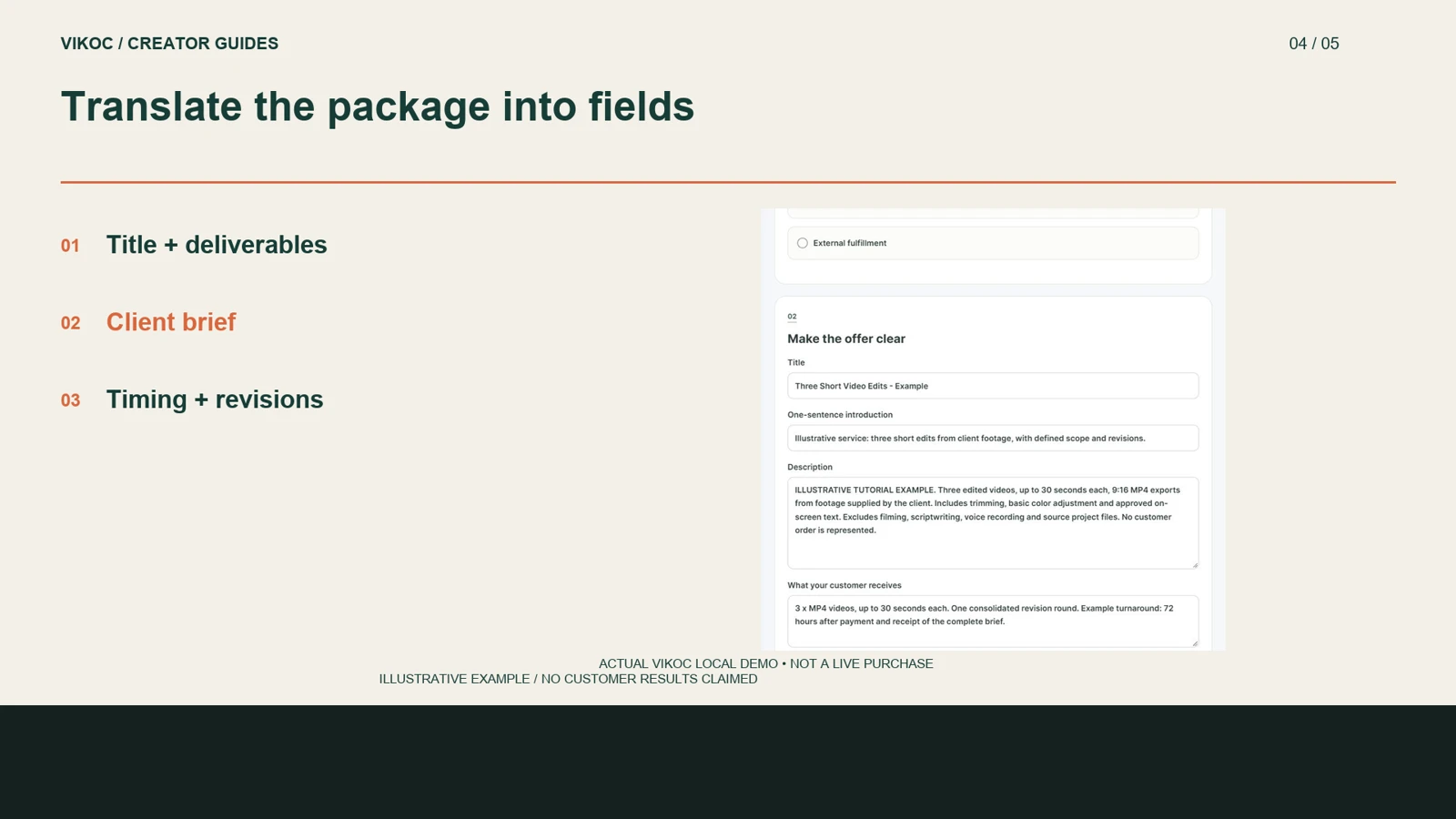
The custom-service editor separates the title, description, customer deliverables, brief questions, delivery time, and revisions. Use that structure for the example editing package. The title names the three short videos.
The deliverables field explains the exports. The brief asks for source footage and approved instructions. The timing field and revision policy explain the working process.
Before saving, read those fields together: they should describe the same offer, without conflicting turnaround promises. If a service requires a different arrangement, revise the package rather than forcing it into misleading wording. This is a local teaching example and not an offer being sold to customers.
The scope should be consistent across the editor fields.
Present and maintain the offer
Use the service page to bring the sample, scope, timing, and price or quote process together. Only show a contact or ordering action that exists in your account. Review the public page and compare it with the actual package you can deliver.
After completing work, note which questions repeatedly arose and improve the description. Do not advertise a turnaround you cannot meet or present an enquiry as a confirmed order. The purpose is a defined offer that both sides understand before work starts.
Try it with one real offer
Draft a three-video package using client-supplied footage. List exports, required inputs, included revisions and excluded filming or scripting. Check the title, deliverables, brief and timing fields for contradictions.
Common questions
What counts as a revision rather than new scope?
Define it in the offer. A caption correction differs from rebuilding an edit around new footage. Explain the boundary and the process for agreeing on additional work.
How should I verify this in my own VIKOC account?
Compare the available controls with the offer you intend to deliver. Review the public destination as a visitor and record which setup, payment or delivery steps were actually tested. A local demonstration is not proof of a completed customer transaction.