

Creator commerce · Data contrast
merach.usa describes itself as a home-gym line with reported video-commerce activity across a broad promoted-product set. The useful question for another equipment seller is narrower than 'does this sell?': should a product explainer carry a room-access and documented delivery/assembly-path checklist, and what would tell you to keep it, drop it, or hold off? Here is that decision, built as a proposed test rather than a claim about the creator's method.
Commerce performance frames a room-access checklist decision
Followers
111,600Follower snapshotVideo units sold
450Rolling 90 daysProducts promoted
61Rolling 90 daysReported video sales
$41,200Rolling 90 daysVideo sales value per unit
$91.56Rolling 90 daysStart with the commercial question, not a broad content strategy.
A home-gym seller publishing an equipment explainer has to choose whether the opening should lead with the product or with a short room-access and documented delivery/assembly-path checklist: can it come through the door, what route does the packaged equipment need to take, where will it sit once installed, and what assembly information does the buyer need before ordering. Both versions sell the same item.
The choice is one information feature.
The snapshot makes that choice relevant without answering it. The profile reports 111,600 followers, while the rolling commerce observations report 450 units and $41,200 in video sales value. The promotion overview reports 61 products promoted. Taken together, those observations describe a creator-commerce context with reported transaction activity alongside a relatively broad promoted-product count.
They do not reveal whether sales were concentrated in one item, distributed across many items, or generated by any particular video.
The aggregate sales value divided by aggregate units is $91.56. That ratio is useful only as a blended description of the reported window. It cannot tell a seller what one product costs, what a buyer typically spends, or whether a room-access explanation affected conversion.
A higher-value equipment purchase may make fit, delivery and assembly questions commercially important, but the snapshot contains no item-level prices, content breakdown or question data to establish that connection.
That missing link is the decision to test. A checklist that helps a buyer rule themselves in could also give a viewer a reason to leave before seeing the product. A lower view count would not distinguish between deterrence and useful filtering.
The decision rule therefore cannot be 'views went down, drop it.' Keep the checklist only if the documented route and assembly information produces a stronger buying signal without a clearly weaker commercial outcome. Drop it if that signal does not appear. Abstain if the versions cannot be compared fairly or the required route and assembly specifications are unavailable.
The snapshot supplies commercial context, not proof that the checklist works or that merach.usa uses it. Followers are not measured reach, promoted-product count is not a sales mix, and reported sales value is not earnings or profit.
The bounded reader decision is whether to test one product-explainer feature and record the result at the level the snapshot cannot provide: comparable viewers, the exact delivery/assembly information available, and attributed commerce outcomes.
Build the room-access checklist as a decision, not a format
The proposed reader lesson is to turn the checklist into a decision you can actually resolve. The decision is: keep the room-access and documented delivery/assembly-path opening on this product, or return to a product-first opening. The checklist is proposed content, not something this creator is shown doing.
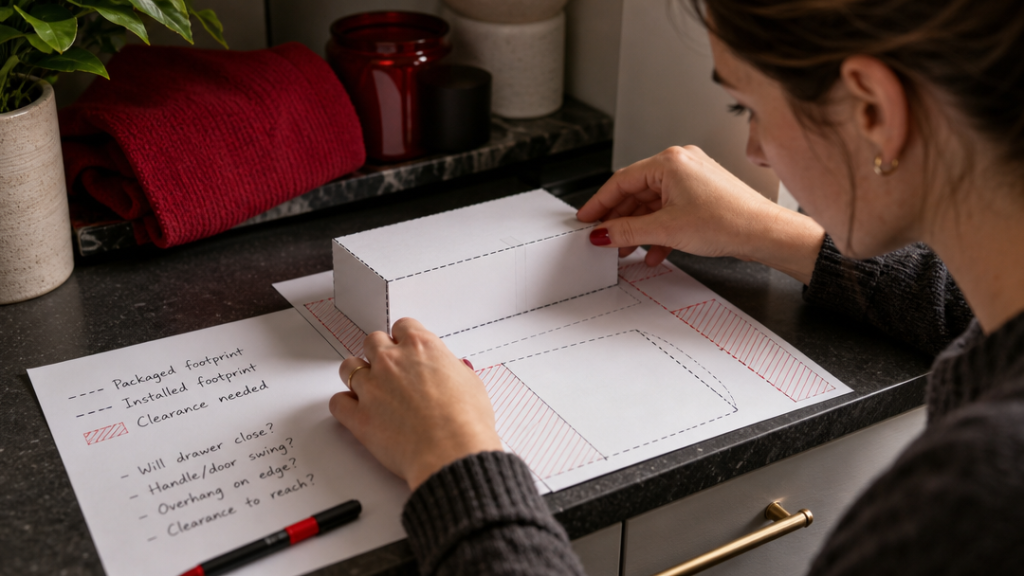
What belongs in the checklist is a documented sequence, not a guessed footprint. First identify the packaged state and the route from delivery point to the intended room; then identify the installed state and the space it requires. Compare those states only when the product information actually supplies the relevant package dimensions, installed dimensions, delivery conditions and assembly requirements.
Manufacturer restrictions, required tools, handling limits and any two-person or professional-installation instruction remain required inputs. Unknown specifications must stay unknown.
The commercial reason to test this feature is not that it should create demand by itself. It may help qualify attention for bulky equipment, but that hypothesis needs evidence from the content and commerce attached to the test. Record the exact information available and the missing input that blocks a reliable route or assembly decision.
Do not treat a plausible-looking footprint or a completed checklist as proof that the buyer can receive and install the equipment safely or successfully.
Write the test condition before publishing: the checklist stays if its documented route and assembly information is complete enough for the intended decision and the commercial outcome is not materially weaker; it goes if the required information is available but does not improve the buying explanation or the commercial outcome clearly deteriorates; and if package dimensions, delivery constraints, manufacturer restrictions or assembly requirements cannot be established, the result is abstention rather than a guessed recommendation.
The threshold is a proposal for the reader's own test, not a benchmark and not a reported result from merach.usa.
A concrete fictional counterexample keeps it honest. Imagine an equipment listing whose installed footprint fits the room, but the documented packaged route from the delivery point cannot be established because the package dimensions and turning requirements are missing.
The correct result is not to infer that the item will pass through the doorway or to provide handling instructions; it is to identify the route as the bottleneck and abstain until the manufacturer or listing supplies the missing input. That exercise does not identify which products to stock or explain how this creator made its videos.
Your next step with VIKOC
Build a home for the business behind your content.
Create a VIKOC account and set up a storefront for your own offers. Give interested readers a clear next step.
Already have an account? You can sign in on the next page.
Products in focus
Leading products by recorded unit sales and sales value within the captured sample. These product totals are not attributed to this creator.
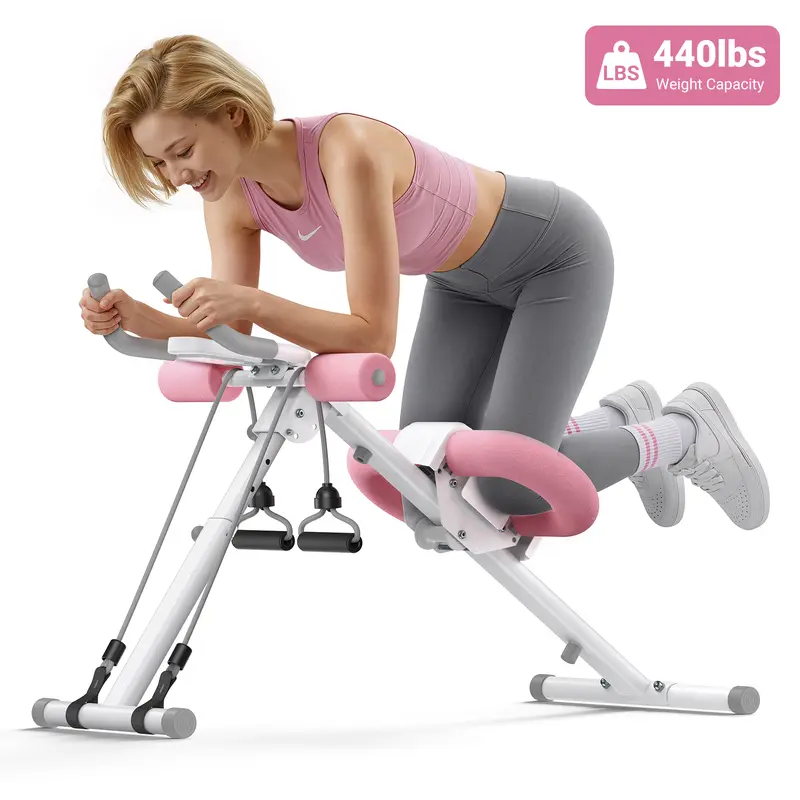
Highest reported unit sales in the captured sample · Highest reported sales value in the captured sample
267,700 reported units sold
17,803,400 USD reported sales value
Source & sales scope
Product-level reported sales; creator attribution and observation period are unverified. Not creator GMV or income.
Observed 2026-11-13 07:56:50-08
Test the checklist with a scored mock decision
Before publishing anything, test your own decision rule against a small set of invented scenarios with a known correct answer.
Write down, for example, three fictional product-information sets and label each keep, drop or abstain in advance: a set with documented packaged and installed states plus stated assembly requirements (keep, if the commercial comparison remains sound), a set where the required information is present but the checklist adds no useful buying explanation or weakens the commercial result (drop), and a set where the packaged route cannot be established because package dimensions, delivery constraints or manufacturer restrictions are missing (abstain).
For each scenario, record the exact missing route or assembly input, if any. Then identify the bottleneck: doorway or turning path, delivery point, packaged dimensions, installed footprint, assembly requirements, manufacturer restriction, or an unavailable commerce comparison. Do not substitute viewer-question counts for this input check.
A scenario is not resolved merely because the installed footprint fits; the packaged route and documented assembly sequence must also be established where those facts are necessary.
Compare the available attributed units and sales value over the same test window only after the product information is sufficient for a fair content comparison. If the checklist presents a documented route and assembly sequence without a weaker commercial result, it earns a further test. If the required input is missing, abstain rather than fill the gap with assumptions.
If the information is complete but the commercial result clearly deteriorates, drop or redesign the proposed feature.
The outcome to watch is whether the decision resolves, not whether the checklist version wins on views. If the route, assembly sequence or manufacturer restrictions remain undocumented, the honest result is to abstain and keep the checklist out of the opening until those inputs can be verified.
About the data
Sales and promoted products cover the recorded rolling 90-day period; followers are a separate snapshot. Sales are source-reported, not independently audited or creator earnings. USD uses the confirmed default where source currency is missing. No usable video link accompanies this archived sample; no video content analysis was used.
- Followers: 111,600
- Point-in-time snapshot. Captured 2026-11-13 08:09:28-08.
- Video units sold: 450
- Source-labelled rolling 90 days. Captured 2026-11-13 08:09:28-08.
- Products promoted: 61
- Source-labelled rolling 90 days. Captured 2026-11-13 08:09:28-08.
- Reported video sales: $41,200
- Source-labelled rolling 90 days. Captured 2026-11-13 08:09:28-08.
- Video sales value per unit: $91.56
- Calculated from sales value divided by units sold in the same period. Source-labelled rolling 90 days. Captured 2026-11-13 08:09:28-08.
Updated November 18, 2026. Independent analysis; no creator endorsement implied.
Request a correction or removal


David A.
0 comment