

Creator commerce · Data contrast
COLDEST is a US creator brand associated with products positioned around long-lasting cold retention and leak resistance. Its record raises a practical business question for product sellers: how can you separate audience potential from buying evidence, then test the explanation that helps the right viewer choose?
Commerce performance adds the buying signal an audience count cannot
Followers
439,300Follower snapshotVideo units sold
1,186Rolling 90 daysProducts promoted
20Rolling 90 daysReported video sales
$71,800Rolling 90 daysVideo sales value per unit
$60.54Rolling 90 daysAt capture, COLDEST had 439,300 followers. That indicates audience scale, not measured reach, unique viewers or buyers. Over a verified 90-day period, its creator-video commerce activity was attributed 1,186 units and $71,800 in reported sales value.
Those observations add something an audience-only assessment cannot: recorded purchase activity associated with creator video commerce during the period. The account is therefore more useful as a case for studying commercial responsiveness than follower count alone. It still does not establish a conversion rate, earnings, profit or why the purchases occurred.
The overview also lists 20 promoted products. That is a breadth signal, not proof that every item sold or that one product drove the result. The aggregate sales value divided by units is $60.54, a ratio across the recorded activity—not a typical item price, order value or margin. The commercial question left for another creator is which product explanation makes an offer relevant to a specific buyer.
Give the buyer a product-fit checklist
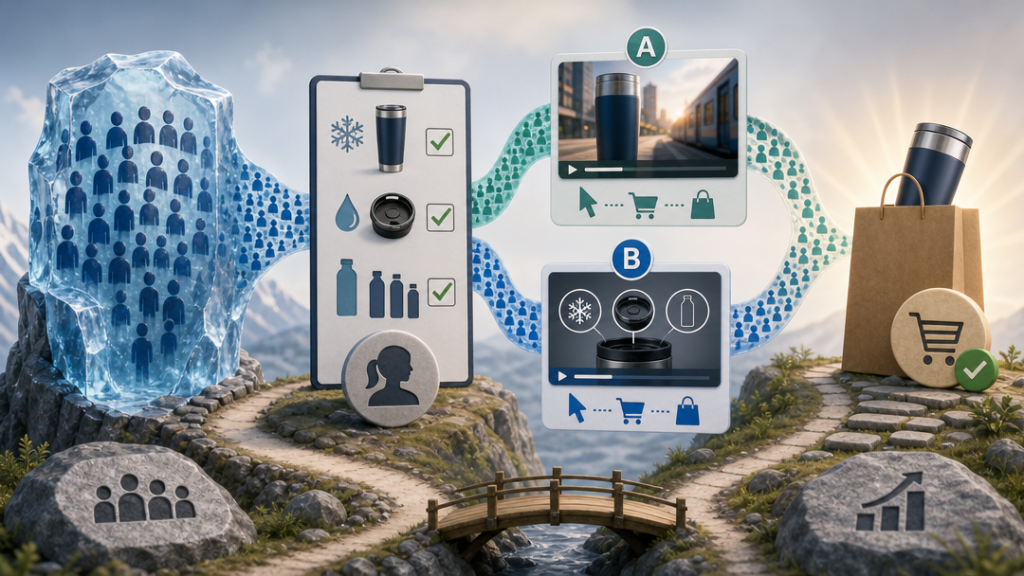
A useful hypothesis is that viewers can make better buying decisions when an offer is tied to one recognizable situation before its features are listed. This is a proposed lesson, not an observed tactic of COLDEST; the available record does not identify the videos, products or messages behind the reported activity.
For a drinkware offer, imagine someone carrying a cold drink through a long workday. A concise explanation could ask that viewer to check three properties: the product’s stated cold-retention claim, whether the lid is designed for leak resistance, and whether its capacity suits the way they carry it. Each point answers a question the viewer can verify on the product page or packaging.
This framing does not promise that the offer suits everyone. It helps the intended buyer decide whether the product fits a real routine, giving the creator a specific explanation to compare with a feature-first presentation.
Film two explanations and log the buying questions
Choose one product and publish two short videos over a seven-day test window. In version A, lead with an everyday use case, identify who may care and then explain one verifiable product property. In version B, lead with a feature checklist while keeping the offer and call to action as consistent as possible.
For each version, record product-page taps, add-to-cart activity, attributed purchases and the number of comments asking a specific fit question—such as whether the product suits a commute, workday or carrying routine. A quiet test is directional, not conclusive.
If the use-case version produces more specific questions and stronger buying signals, make that structure the starting point for the next script. If the feature-led version performs better, retain the clearest checklist and test a sharper opening that names the buyer’s situation. Let the next explanation follow the response, rather than audience size alone.
About the data
Sales and promoted products cover the recorded rolling 90-day period; followers are a separate snapshot. Sales are source-reported, not independently audited or creator earnings. USD uses the confirmed default where source currency is missing. The featured video illustrates the account; it has not been analyzed to explain sales.
- Followers: 439,300
- Point-in-time snapshot. Captured 2026-10-27 17:20:18-07.
- Video units sold: 1,186
- Source-labelled rolling 90 days. Captured 2026-10-27 17:20:18-07.
- Products promoted: 20
- Source-labelled rolling 90 days. Captured 2026-10-27 17:20:18-07.
- Reported video sales: $71,800
- Source-labelled rolling 90 days. Captured 2026-10-27 17:20:18-07.
- Video sales value per unit: $60.54
- Calculated from sales value divided by units sold in the same period. Source-labelled rolling 90 days. Captured 2026-10-27 17:20:18-07.
Updated November 3, 2026. Independent analysis; no creator endorsement implied.
Request a correction or removal



David A.
0 comment