The short answer
The best first digital product is a small, useful deliverable for a recognizable buyer problem that you can finish, explain and support. Compare a few candidates by evidence of need, delivery effort and the result a buyer can see.
Start with three candidates
Meet our fictional creator, Maya. She knows how to design café promotions. Her three ideas are a complete marketing course, a coordinated poster pack, and a one-page event planning worksheet.
All three use her skills, but they solve different problems and take different amounts of work. Write your own three candidates in the same way. Name a specific buyer, a task, and the thing you will deliver.
An idea like something about marketing is too broad to compare. A worksheet for planning one coffee tasting is concrete enough to evaluate.
Filter one: A recognizable problem
Now ask whether a real person recognizes the problem. Maya can look at questions from café owners, conversations with potential customers, and the tasks she has already helped people complete. She should not invent customer quotes or treat a large keyword number as proof that her exact product will sell.
For each candidate, write down one piece of evidence and one unanswered question. If you cannot explain when the buyer would use the product, narrow it further. Keep evidence separate from your own enthusiasm.
Filter two: Delivery effort
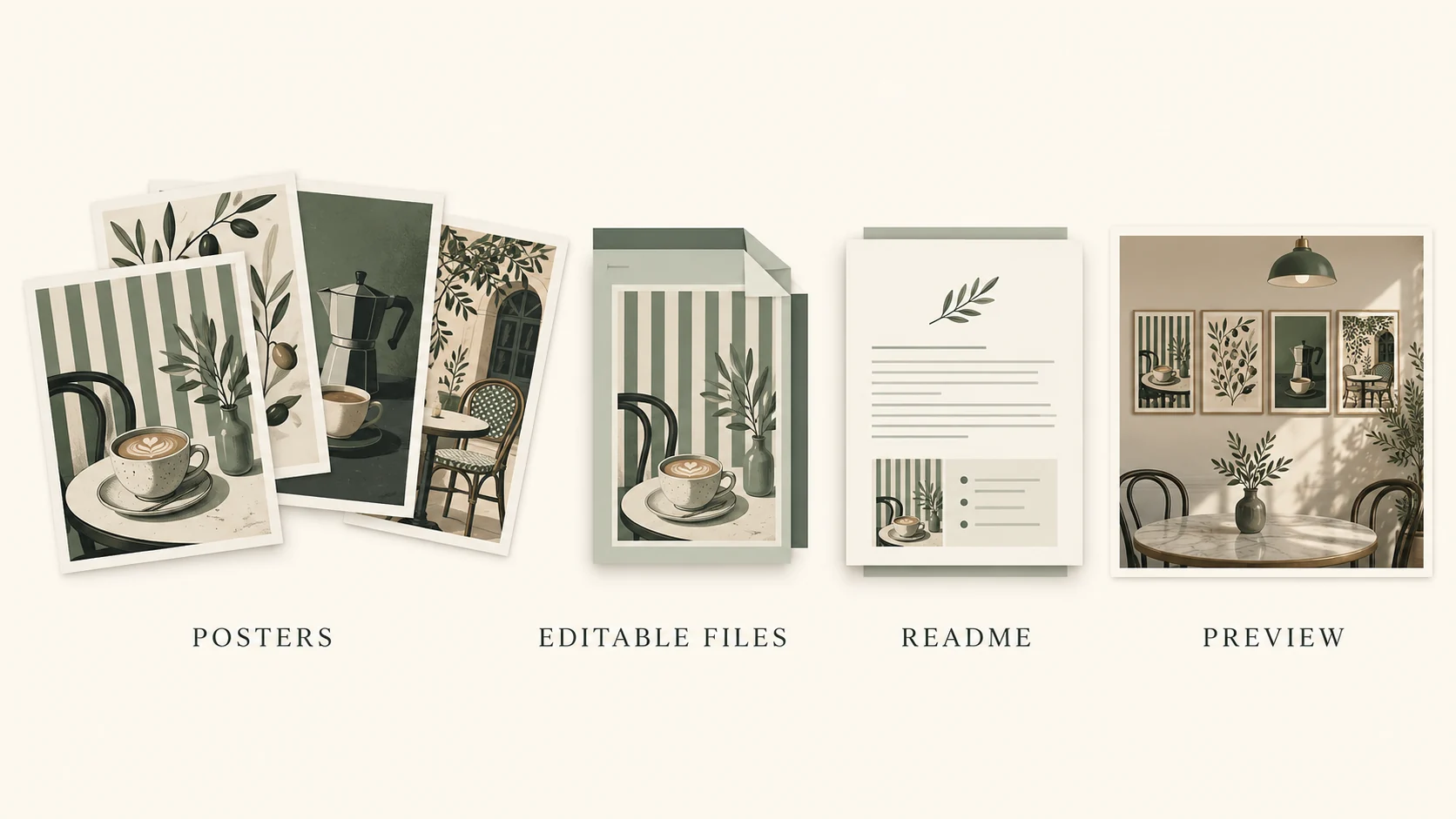
Next, compare what you can deliver reliably. A complete course needs lessons, examples, recording, and ongoing support. The poster pack needs working source files and useful previews.
The worksheet needs a clear sequence and space for the buyer's answers. The smallest option is not automatically the best, but a manageable first version lets you learn sooner. In this example, Maya sets aside the full course because she cannot yet commit to producing and supporting it.
That is a scope decision, not a judgment that courses are bad products.
Filter three: A visible result
Compare the two remaining ideas by showing a sample. A poster pack can demonstrate readable event headlines and coordinated designs. A worksheet can demonstrate a completed event brief.
Ask a potential buyer what they think the sample helps them do, and what seems missing. Avoid a leading question such as you would buy this, right? In our example, Maya chooses the poster pack because she already has three original designs and can show the result clearly.
Your evidence may lead you to a different choice.
Write the offer in one sentence
Turn that choice into a sentence: a three-design café poster pack for owners promoting a new menu, brunch, or a tasting event. Then list the actual files, the editing requirements, and what is not included. Maya's example uses PNG previews and editable SVG files; it does not include a Canva template link or custom design service.
Put this clear promise into a product draft in VIKOC. Check whether the title, preview, and delivery description all describe the same product before spending time on extra features.
Try it with one real offer
Compare three ideas: a full marketing course, a café poster pack and a one-page event worksheet. Write one piece of demand evidence and one unanswered question beside each; choose a narrow offer you can test.
Common questions
Which digital products are suitable for beginners?
A focused worksheet, original template or short guide can be manageable when it matches an existing skill and a real task. Simplicity alone does not prove demand.
Does keyword volume prove that my product will sell?
No. Search interest is a clue about a topic, not proof that a particular audience will buy your exact offer. Combine it with conversations and practical tests.